Jonas Lang · 4 November 2026
Regional Festivals Bridge Record Wheat Outputs to Urban Interest in Biodiversity-Rich Crops
Regional festivals across multiple continents now serve as meeting points where record wheat harvests meet rising city demand for crops grown under biodiversity-supporting practices, and observers note these events have grown in scale since the mid-2020s. Data from agricultural monitoring programs shows wheat yields reached new highs in several key producing areas during 2025, while urban consumers increasingly seek vegetables, fruits, and grains from farms that maintain varied species mixes rather than single-crop fields. These gatherings combine harvest celebrations with direct sales, allowing producers to present both high-volume staple crops and smaller batches of mixed produce to the same buyers.
Yield Records and Shifting Market Signals
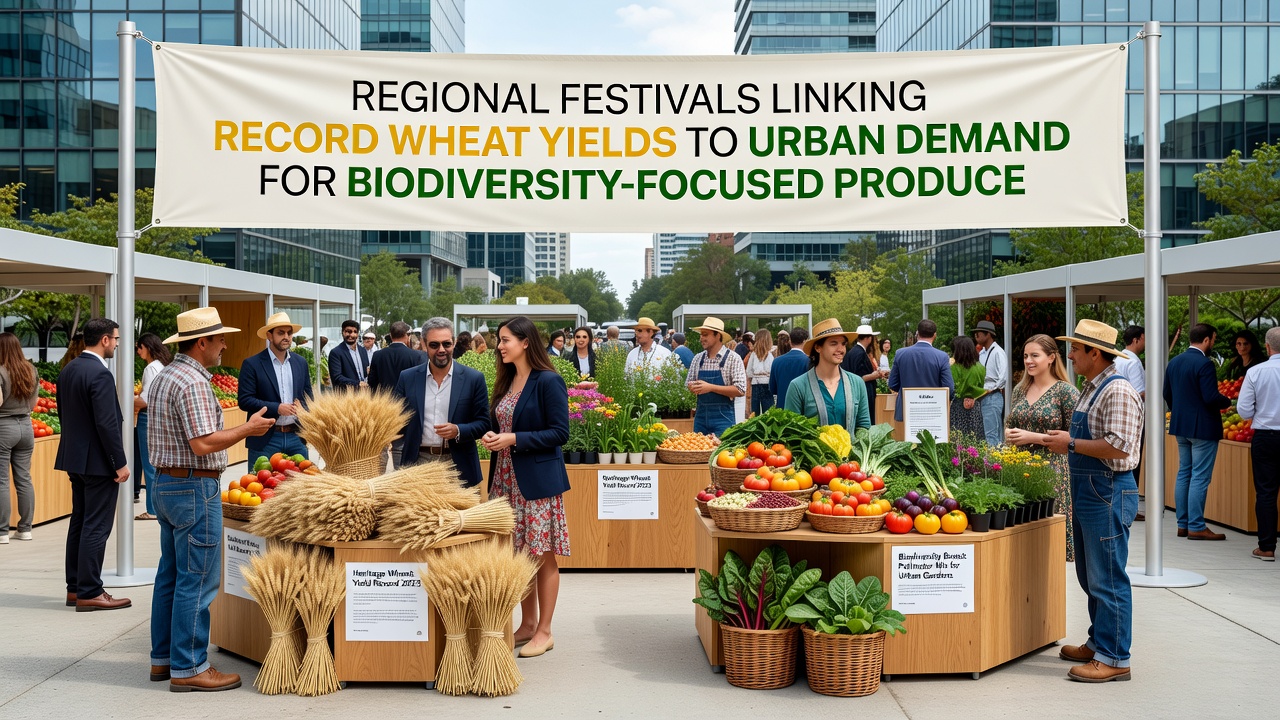
National statistics agencies recorded wheat output peaks in 2025 that exceeded prior benchmarks by margins ranging from 8 to 12 percent in select districts, driven by improved seed varieties and precision planting techniques according to reports compiled by the US Department of Agriculture. At the same time, surveys conducted by metropolitan food distribution networks indicated that demand for produce from farms using cover crops, pollinator habitats, and crop rotation rose steadily, with sales volumes climbing in the double digits over three years. Festival organizers have positioned these events to showcase both trends side by side, placing wheat demonstration plots next to stalls featuring multi-species vegetable baskets.
How Events Create Direct Links
Organizers structure festival programs so that wheat-focused field tours conclude at markets offering biodiversity-oriented items, creating a continuous flow of information and purchases. One study from a Canadian research university tracked attendance at such events and found that roughly 40 percent of urban visitors bought mixed-crop boxes after learning about the wheat yields on the same day. These programs often include tasting sessions that pair bread made from the record harvest with salads containing rare heirloom varieties, demonstrating compatibility between volume production and ecological diversity. In November 2026 several planned gatherings will extend this format to include live soil health demonstrations and real-time yield data displays from participating farms.
Attendance figures released by event coordinators reveal that city-based buyers now account for more than half of ticket sales at many rural harvest festivals, reversing earlier patterns where local residents formed the majority. This shift coincides with expanded rail and bus services that transport produce directly from festival grounds to urban distribution hubs, reducing transit steps between field and market. Industry associations representing both grain growers and specialty vegetable producers have noted that joint participation at these festivals has increased the number of supply contracts signed on-site by approximately 25 percent compared with pre-2024 levels.
Regional Variations in Approach
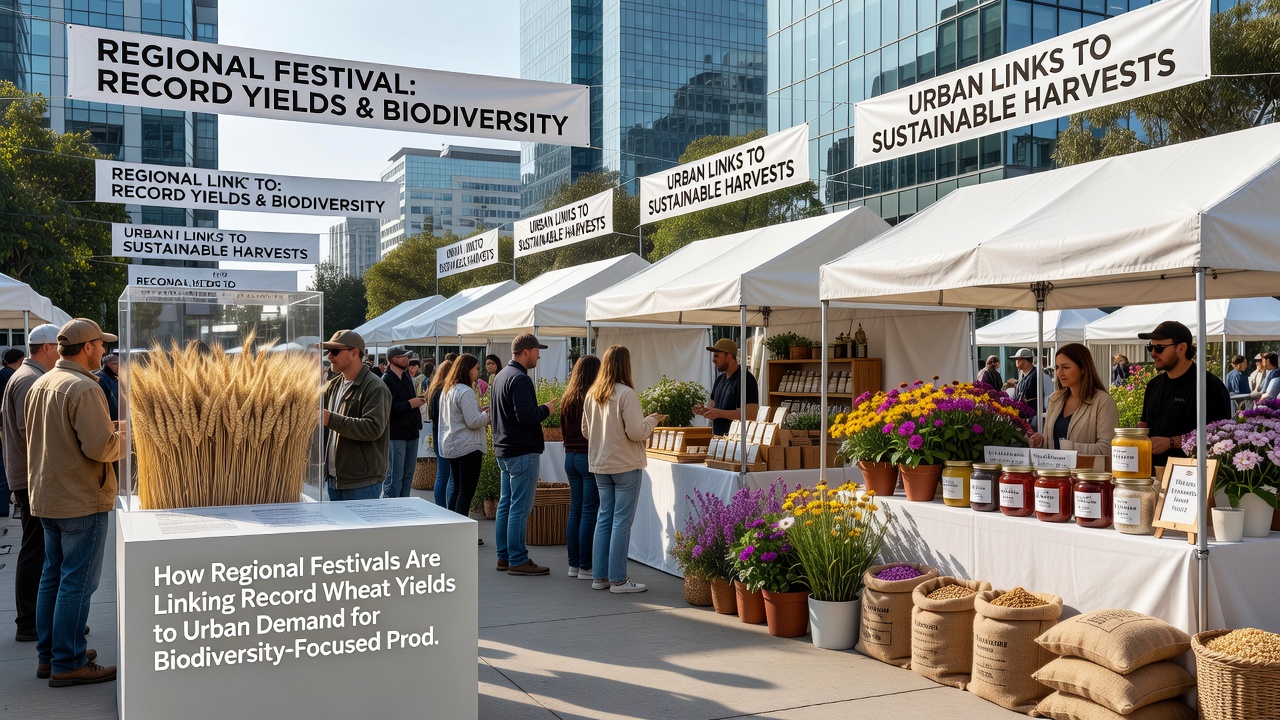
Different areas adapt the festival model to local conditions while maintaining the core connection between wheat records and biodiversity demand. In parts of the American Midwest, events emphasize wheat straw used as mulch in diversified vegetable plots, whereas Australian regional shows highlight drought-resistant wheat strains grown alongside native flowering species that support pollinators. European organizers have incorporated data from long-term rotation trials that show stable wheat yields when interspersed with legume and herb strips, presenting those findings alongside produce samples. Each format uses the same principle of placing high-yield grain information directly beside evidence of multi-species farming success.
Market researchers tracking urban retail data report that stores sourcing from festival-linked farms experienced sustained increases in repeat purchases of biodiversity-labeled items through late 2025, even as overall food prices fluctuated. These patterns suggest that exposure at festivals translates into ongoing buying habits once consumers return to city environments. Agricultural extension services in several countries now supply participating farms with standardized display materials that combine yield statistics with biodiversity metrics, ensuring consistent messaging across events.
Supply Chain Adjustments Following Festival Connections
Once contracts form at festivals, logistics networks adjust routes to accommodate both bulk wheat shipments and smaller, frequent deliveries of mixed produce. Trucking cooperatives have introduced split-load vehicles that carry wheat to mills on outward journeys and return with biodiversity produce for city markets, improving vehicle utilization rates. Warehouse operators report that cold-storage allocations for diverse crops increased by measurable percentages in cities near major festival locations during the 2025-2026 season.
Looking Ahead to Continued Integration
Planning documents from festival committees indicate continued expansion of joint programming into 2027, with added emphasis on digital platforms that allow pre-event ordering of both wheat-derived products and biodiversity produce. Academic institutions tracking these developments note that the linkage created by festivals provides measurable data points on how volume staple production and ecological farming practices can coexist within shared market channels. As more regions adopt similar event structures, the pattern of record wheat outputs appearing alongside urban demand for varied crops is expected to generate additional supply agreements documented at future gatherings.
Conclusion
Regional festivals have established repeatable pathways that place record wheat yields in direct proximity to urban demand for biodiversity-focused produce, supported by attendance data, contract figures, and logistics adjustments observed through 2026. These events continue to evolve their formats while preserving the core function of connecting the two agricultural trends through shared physical spaces and coordinated messaging.