
Vera Reed · 21 October 2026
European Urban Markets Spark Revival of Traditional Crop Strains via Direct Farmer Ties
City markets across Europe continue to connect urban consumers with producers who specialize in heritage crop varieties, and this pattern has gained momentum through direct partnerships that bypass traditional supply chains. Observers note that these arrangements allow farmers to grow older strains of tomatoes, grains, and root vegetables that often require specific growing conditions yet deliver distinct flavors and resilience traits. Data from agricultural networks indicate rising participation in such models, particularly in cities like Rome, Paris, and Barcelona where weekly markets serve as hubs for these exchanges.
Market Structures Supporting Heritage Varieties
Direct producer partnerships operate through contracts that specify crop types, quantities, and delivery schedules, which gives growers the stability needed to maintain smaller plots dedicated to non-commercial varieties. Researchers at institutions across the continent have documented how these agreements reduce reliance on standardized seeds and encourage cultivation of plants adapted to regional soils and climates. In October 2026 several markets reported expanded stalls featuring items such as ancient wheat types from the Apennines and purple carrots from southern France, items that previously appeared only in limited seasons.
Partnerships often include shared risk clauses where buyers commit to purchasing entire harvests even if yields vary, and this approach has proven effective for varieties prone to irregular production. Figures from the European Commission on agriculture show increased registration of heritage seed producers in member states since 2024, with Italy and Spain leading in numbers of active contracts. Those involved point to streamlined logistics that move produce from field to stall within 48 hours, preserving freshness and minimizing storage needs.
Regional Examples and Crop Focus
Take one network in the Netherlands where Amsterdam markets link directly with growers near the Rhine delta to supply landrace potatoes that resist certain soil pathogens better than modern hybrids. Similar setups appear in Greece, where Athens vendors partner with Peloponnese farmers on old olive and legume strains that support local biodiversity records. Evidence from field studies reveals these crops often require fewer chemical inputs once established, although initial establishment periods demand careful management.
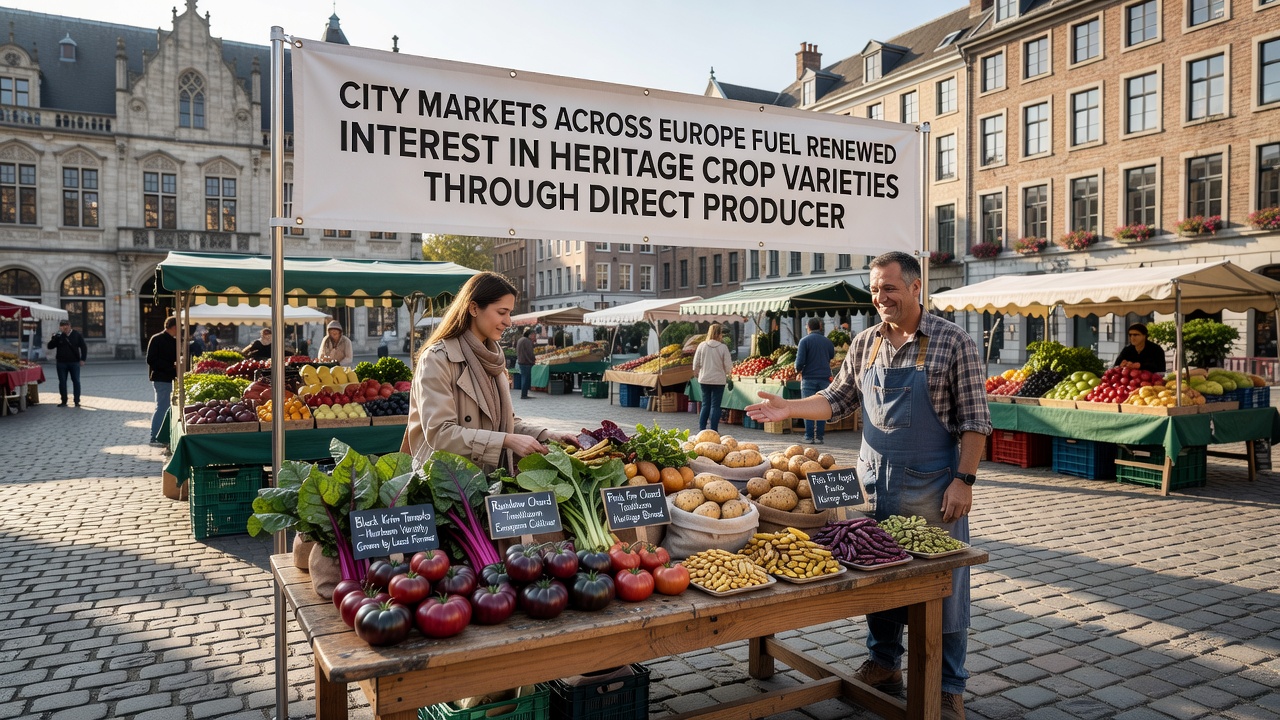
What's interesting is how consumer demand shapes these selections, with data indicating preferences for visual diversity and taste profiles that differ from supermarket offerings. Markets in northern Europe have incorporated varieties originally from Mediterranean regions through partnerships that include seed exchanges and joint trial plots. Academic reports from the University of Bologna detail successful multi-year collaborations that stabilized yields for certain bean types previously at risk of disappearing from commercial circulation.
Supply Chain Adjustments and Data Trends
Supply chains adapt by incorporating shorter routes and fewer intermediaries, which lowers transport emissions according to environmental tracking data. But here's the thing: these models still face challenges around scaling, because heritage varieties typically produce lower volumes per hectare than industrial strains. Regulatory bodies in multiple countries have introduced support programs that subsidize the transition costs for smallholders entering such partnerships, and participation numbers continue to climb.
Studies compiled by the European Environment Agency highlight measurable increases in on-farm genetic diversity where direct market links exist, with measurable effects on pollinator activity in surrounding areas. Producers report better price predictability when contracts lock in rates ahead of planting, which encourages continued investment in seed saving and variety maintenance. October 2026 updates from several city administrations noted new market infrastructure investments aimed at accommodating expanded heritage sections.
Conclusion
Direct partnerships between urban markets and producers have created pathways for heritage crop varieties to reach wider audiences while providing economic incentives for their preservation. Records show steady growth in the number of active agreements across Europe, supported by policy frameworks and consumer patterns that favor traceable, regionally distinct produce. These developments continue to influence agricultural practices and market operations in measurable ways.