Xander Reed · 23 September 2026
Bavarian Potato Producers Adopt Advanced Methods to Address Weather Variability
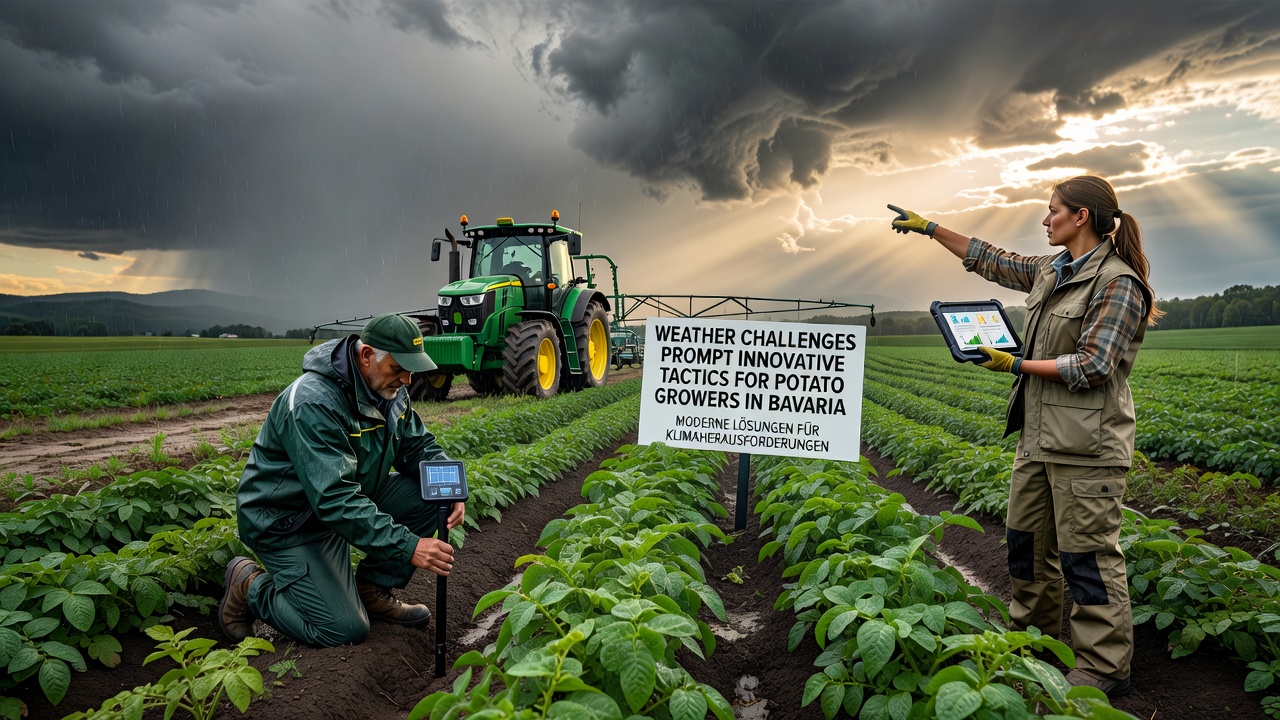
Bavarian potato producers have encountered increasingly erratic weather patterns over recent growing seasons, prompting shifts in cultivation practices that combine traditional knowledge with modern tools; these changes address irregular rainfall distributions, temperature fluctuations, and extreme events that have affected yields in the region since the early 2020s.
Data from the German Weather Service indicates that Bavaria recorded above-average precipitation in spring followed by prolonged dry spells during summer months in 2025, while projections for September 2026 suggest continued variability in soil moisture levels across key potato-growing districts such as Lower Bavaria and the Upper Palatinate.
Observed Weather Patterns and Their Effects
Researchers at agricultural institutes have documented how heavy downpours in April and May often lead to waterlogged soils that delay planting, whereas subsequent heatwaves in June and July accelerate evaporation and stress developing tubers; these cycles have become more pronounced, with records showing a 15 percent increase in the frequency of such alternating extremes compared to the previous decade.
Potato varieties commonly grown in Bavaria, including those suited for table use and processing, show sensitivity to these swings, resulting in uneven tuber sizing and higher susceptibility to diseases like late blight when humidity spikes follow dry periods; observers note that average yields dipped by roughly 8 percent in affected areas during the 2024 and 2025 harvests according to regional agricultural reports.
Technological and Agronomic Adaptations
Producers have turned to precision irrigation systems that rely on soil moisture sensors and weather forecasts to deliver water only where and when needed, reducing overall consumption while maintaining crop health; these setups integrate with satellite imagery and local meteorological data to predict stress points days in advance.
Breeding programs have accelerated the introduction of drought-tolerant and disease-resistant potato cultivars, with field trials coordinated by Bavarian research stations demonstrating improved performance under simulated stress conditions; farmers in the region have begun incorporating cover crops such as mustard and clover between rows to enhance soil structure and retain moisture during dry intervals.
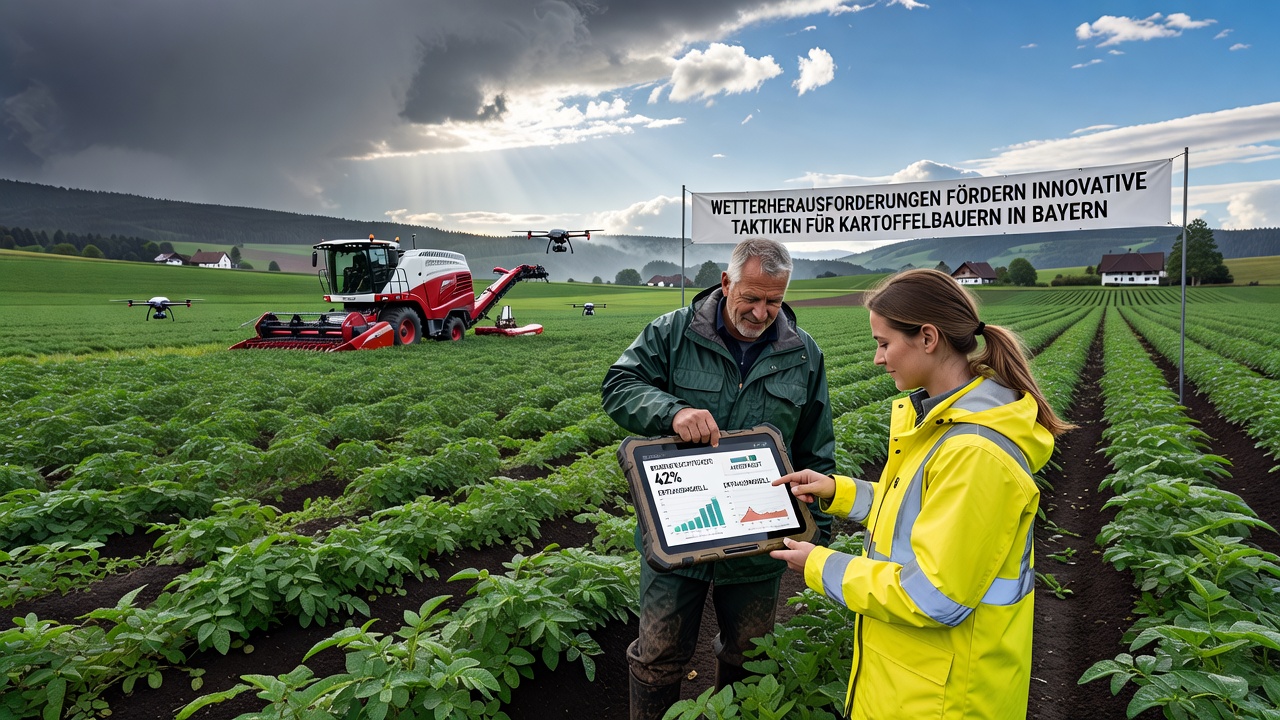
One study conducted by European agricultural networks revealed that farms adopting variable-rate fertilization alongside these irrigation methods achieved more stable outputs despite weather inconsistencies, while mechanical weeding combined with targeted fungicide applications has lowered input costs in several documented cases.
Regional Examples and Broader Context
In districts around Passau and Landshut, cooperatives have pooled resources to install shared weather stations that feed real-time information into decision-support apps used by multiple growers; this collaborative approach allows smaller operations to access data previously limited to larger enterprises and has contributed to coordinated planting schedules that avoid peak risk windows.
European Union agricultural statistics highlight Bavaria's role as a significant potato producer within Germany, where total output supports both domestic markets and export channels; adjustments in farming techniques align with broader efforts across member states to meet sustainability targets while maintaining productivity under changing climatic conditions.
Academic papers from institutions in neighboring countries have examined similar challenges in potato systems, providing comparative insights that Bavarian advisors have adapted to local soil types and microclimates; these exchanges have led to refinements in crop rotation sequences that interrupt disease cycles exacerbated by wetter autumns.
Outlook for Future Seasons
Monitoring programs scheduled through 2026 emphasize continued evaluation of hybrid varieties and digital tools, with initial results from ongoing trials expected to inform wider adoption by the following spring; authorities have noted that early implementation of these tactics has already helped stabilize supplies in select cooperatives despite the preceding season's fluctuations.
Industry organizations continue to track water availability metrics and temperature anomalies, supplying growers with updated guidelines that integrate findings from both field observations and modeling exercises; such resources support incremental refinements rather than wholesale overhauls of established practices.
Conclusion
Bavarian potato production demonstrates how targeted innovations in irrigation, variety selection, and data-driven management can respond to documented weather shifts without requiring entirely new infrastructure; ongoing research and regional cooperation provide the foundation for sustaining output levels as conditions evolve through the remainder of the decade.